Showing posts with label 160m. Show all posts

Monday, 16 December 2019

FT8 ... Such A Tease

Looking towards EU over Georgia Strait, last winter


With the continued tsunami of FT8 activity on the HF bands, I decided to have a look at what was happening in the FT8 segment of 160m.


On Saturday afternoon, about ninety minutes before my local sunset here in south west British Columbia, I set my receiver and 160m half-sloper to work, along with WSJT-X, on 1840kHz USB mode.

Although still in broad daylight, the waterfall was immediately flooded with signals! As I started to pay closer attention, I realized that many of the signals were from Europe! Many were audible while the rest were fast-approaching that level, being stronger than -20db. I let the receiver run for another few hours and took a screen capture of my PSK Reporter screen, illustrating what had been decoded over that time span:

courtesy: https://www.pskreporter.info/pskmap.html

Checking other NW or VE7 monitors during the same time span showed no EU decodes at all, which I found surprising ... perhaps I missed someone. My location here on the eastern shoreline of Mayne Island looks towards EU and many other directions directly over a large body of saltwater ocean, Georgia Strait. The photo above was taken last winter, through the living room window. It is also very quiet, electrically, with little or no noise most of the time.

It appears that the lack of man-made noise combined with the theoretical 6db saltwater horizon gain (being realized), is enough to allow these signals to be heard. Signals continued to be decoded as darkness approached but at around 1800 local time, began to drop off ... evidently this appears to be a sunset enhancement, similar to what I often see to the east coast on the 630m band.

Now here’s where it gets even more interesting, as my decodes for the ninety minutes before and after local sunrise indicated a similar pattern!

The most probable path for these signals, around sunrise, would be via the long path in darkness. Although there is no saltwater directly behind me, it seems that the 'quietness' may be enough to do the job. Here’s the slightly post-sunrise screen cap from PSK Reporter:

courtesy: https://www.pskreporter.info/pskmap.html

FT8 is surely a tempting seductress. So far I have resisted the fast-growing urge to spark-up in this mode on 160m ... but I may be growing weaker. This all looks so very interesting.

Thursday, 12 April 2018

Will The Sun Get Too Quiet For Topband DX?


Those of us that like to hunt European DX on 160m from the west coast know that the best time for this is during the 'solar low' years, those quiet periods between the end of one solar cycle and the beginning of the next.


From the west coast, openings to Europe on 160m are not something that happens with much regularity and, unlike the more frequent paths to Europe enjoyed from the east coast, are almost exclusively limited to this quieter part of the solar cycle. The weakening of the Sun's magnetic field at these times allows for less prop-killing D and E-layer signal absorption, particularly through the northern auroral zone path required from the west coast.

In his October, 2016, posting to the Topband reflector, propagation guru Carl Luetzelschwab, (K9LA), suggested that the coming years of solar lows may actually be too low and that because of the likely unprecedented low levels not seen in our lifetimes, the planet could receive higher cosmic-ray bombardment than normally associated with these periods.

"Since galactic cosmic rays are mostly *very energetic* protons, they can get down to low atmospheric altitudes, causing collisional ionization in the D region (and lower E region). A cursory estimate using cosmic ray ionization rates confirms more ionization in the lower atmosphere. 160m is not very tolerant of more absorption, so we may see an adverse effect of the weakened solar magnetic field."

K9LA's Topband comments  seems to have its roots in his May, 2015 article, "What's Going On With-160 Meters?", where he compares the solar minimum period between Cycles 22 and 23 to the minimum years between Cycles 23 and 24. Carl noted that the best 160m propagation period that he had seen in his lifetime was during the years between Cycle 22 and 23 and pondered why, during the even deeper prolonged low between Cycles 23 and 24, was it not producing the same levels of great propagation observed 11 years earlier. One possibility he puts forward was that ...
 
" ... it involves galactic cosmic rays (GCRs). At solar maximum, the Sun is more active, causing more geomagnetic field activity that is believed to be detrimental to 160-Meter propagation. Coupled with the Sun being more active is the fact that the Sun's magnetic field is stronger, which shields the Earth from galactic cosmic rays. Going the other way, when we're at solar minimum, the Sun's magnetic field is weakest, letting in more cosmic rays."

His graph shows the yearly trend of only the  low Ap index days (geomagnetically quiet) versus smoothed sunspot numbers for several recent cycles. The blue line plots the trend of low Ap index values with the black line showing the smoothed values; the red line indicates the smoothed sunspot number (solar activity levels).


source: http://k9la.us/May15_What_s_Going_On_with_160-Meters.pdf

Carl's earlier observations indicating that the best 160m propagation he had ever observed was during the low period between Cycle 22 and 23 and not during the much quieter low period between Cycle 23 and 24 are very much different than my own ... perhaps because of our different locations. 

From the west coast, the most challenging topband path is over the pole to Europe. This only occurs during 'best propagation' periods as this path will only open during prolonged periods of very low geomagnetic activity. Unlike Carl's path to Europe, west coast signals need to traverse the signal-killing auroral zone. 

During the first low period, I did experience several openings to Europe but nothing compared to what they were during the second low period, between Cycles 23 and 24, the one Carl did not experience propagation as good as the previous low. For several winters in a row, during the 23-24 low, I often found night after night of amazing propagation to Europe, the quality of which I had never heard before. Interestingly, on almost all of these nights, there were no other signals on the band but Europeans and nearby Washington or Oregon state W7s ... no signals at all from the rest of North America. At times it mimicked the sound of 20m CW to Europe, with signals often reaching S9 on my FT-1000 S-meter. I even worked one SM station on CW while running just 10W output!


With this long intense low, cosmic ray bombardment should have been at an all time high ... maybe it was, but it didn't seem to be bothering the west coast path to Europe, via the seemingly dormant auroral zone. 

I was prompted to address this topic after reading a recent report on the GeoSpace website, siting a new study  led by Nathan Schwadron, professor of physics at the University of New Hampshire’s Space Science Center. In the study, recently published in the journal Space Weather, a publication of the American Geophysical Union, the researchers found that large fluxes in Galactic Cosmic Rays (GCR) are rising faster and are on a path to exceed any other recorded time in the space age.

The author's study predicted a 20% increase in radiation bombardment but their newest research shows current conditions exceed their predictions by about 10 percent, showing the radiation environment is worsening even more than expected.

With cosmic ray levels now predicted to increase by a whopping 30%, Carl and the rest of us may soon get some clarity on his original postulation that "maybe a solar minimum can be too deep for 160 meters."

With the next few cycles expected to be even poorer than the present one, the large increase in radiation levels from space may have profound impacts on more than just propagation ... satellites and, with a new appetite to return human activity to the moon, astronauts could be exposed to much higher radiation levels than ever before.

The next few years of (ultra?) solar-quiet should be very interesting!

Saturday, 15 April 2017

The JK BevFlex-4 Antenna


This past week, comments regarding an interesting new low-noise directionally-switched receive antenna popped-up on both the Topband reflector and the IRCA (BCB DXers) reflector.

The new JK BevFlex-4 is reported to work very well without requiring a lot of real estate for deployment. The antenna was designed by Geoff Mendenhall, W8GNM, and Ned Mountain, WC4X.

There are several things that make this package a little different. The antenna can be configured in four basic forms: CLASSIC BEVERAGE, BEVERAGE ON GROUND (BOG) / BEVERAGE IN SOD (BIS), INVERTED EWE, or as a FLAG. What is quite different however is its flexible feedpoint allowing the antenna to be fed at any point along its length when used in the BOG or BEVERAGE configuration. The antenna is completely passive and requires no preamplification although, in some configurations, it is suggested for use above 7MHz.

Full details can be found at the JK Antennas website, as well as the manual and a FAQ page.

The FAQ sheet indicates that it will perform from LW through to 10m but the most dramatic improvement in reception from users has been noted on the lower bands. It sounds like it might make an interesting antenna for NDB DXing as well.

In the BOG form, the antenna can lay right on the ground or be buried (BIS) just below the surface using RG-6 for the actual antenna element. Other configurations allow much smaller, stealth-sized wire to be employed.

An interesting YouTube video of the antenna in action as well as an in-depth description may be viewed here:


Here is one comment from an east coast topbander:

I also bought one this year....deployed it as an EWE, as that’s all the room
I have, small lot in a subdivision.....in order to work them you need to
hear them, and once I put that up, I could hear !!! first put up as EU/VK-ZL
and worked several in the DX contest, but when the african dxpedetions were on, moved it to due east/west., and worked all of them, S01, etc.....front to back is remarkable on 160, it works ok on 80, (mine was 10ft high and 38 ft long) but really rocks on 160 !!!!, and really cuts down the line noise/static I normally hear on my transmit Inv L.

Perhaps this may be your answer for a small effective receive antenna for LW and above but even if not, their website description makes for interesting reading.

Sunday, 5 February 2017

Topband Trifecta


It was a week of 'threes' when it comes to the 'gentleman's band'. The first was last weekend's CQ 160m CW Contest ... exciting as always, with propagation from VE7 land favoring the southeast. At times, signals from the Caribbean were exceptionally strong while it was a struggle on both nights to work eastern W1's. As usual, I entered in the low power division with a power limit of 150 watts, spending 8 hours in total and finishing with 249 contacts in 51 sections / 8 countries. Other than the odd State QSO Party, the 160m contests are about the only ones I enter these days.

The mail brought my next two Topband delights. The first being a copy of Jeff Brigg's (K1ZM / VY2ZM) spanking new "DXing on the Edge - The Thrill of 160 Meters". This is the second edition of Jeff's original classic which was published twenty years ago in 1997.

The new second edition carries all of the original content (except for the CD) along with four new added chapters. Although the original material is dated, it is still just as valuable and informative as it was when first published. Highlights of the book include chapters on:

  • Propagation
  • The Stew Perry Era (1930-1982)
  • 160m DX Chronology 1930 - Present (8 Chapters)
  • Notable Achievements
  • Simple and Effective DX Transmitting Antennas
  • Simple and Effective Receiving Antennas
  • Tips From DXers
  • Photographic Potpourri
  • Off-The-Shelf Transmitting Antenna Solutions (new)
  • Modern RX Solutions For Small Properties (new)
  • Cycle 24 & A View Forward (new)
  • 160m Achievement Levels As Of 2016 (new)

If you have any serious interest in DXing on 160m, you will find much inspiration in Jeff's book. The descriptions of many stations, from the simple to the extreme, highlight the fact that almost anyone can achieve DX success on the 'Topband' with a little perseverance and some thoughtful station design.

When it comes to Topband DXing, things have changed a lot since 1997 ... as Jeff indicates in the new section, his main reason for releasing a second updated version:

" ... was to publicly review the technical advances that are now available to the modern 160M DX'er. In this way, everyone - old timers and newcomers alike - would have the time to "get ready" for some great years that will be coming soon on Topband. So get going ... gear up ... start making plans now to be part of the action. It is probably going to be a wild ride ahead and a lot of DX'citement for those who are up to the challenge!"

If the coming solar low years are anything like the last previous low, we are indeed in for some fun times!

Jeff's book can be purchased through numerous outlets including Amazon and Chapters, often with free-delivery.

The third Topband event, again via the mail, was the arrival a new 160m QSL.


The sunrise 160m CW contact with H4ØGC, Temotu, was confirmed country #159 for me on Topband, with most of these being worked from here on Mayne Island using a half-sloper and an aging 500 watt amplifier with a pair of original 572Bs.

If you've not been on 160m and are keen on new operating challenges, Topband may be the place to begin ... along with a copy of Jeff's inspirational 'Topband handbook'.

Tuesday, 13 December 2016

My Favorite Contest


A few blogs back, I briefly touched upon my favorite contest of the year ... the 160m Stew Perry Contest, or more affectionately noted as the 'Stew' or 'SP'.


The contest is named in honor of W1BB, one of the earliest and most dedicated proponents of 160m in its earlier days, as well as being the first amateur to earn 160m DXCC #1, in 1976.

courtesy: http://www.k1zm.com/w1bb
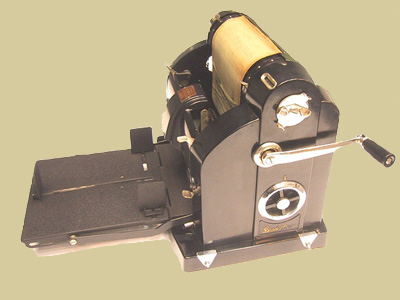
Stew published a regular '160m News' bulletin, lovingly cranked out on his old Gestetner (remember those messy things?), which was mailed free of charge upon request.

These bulletins were chalk-full of DX reports, station information, and antenna-building hints. It was hard not to get excited about the Topband after reading one of Stew's bulletins!


This was largely back in the day when very few commercial transmitters had a 160m position on the bandswitch. If it did, it was most likely a hernia-making DX-100 or a similar E.F. Johnson biggy ... seems most 160m ops were he-men back in the early days.

Heathkit DX-100
To make things even messier, the band was covered with horrendous Loran QRM, much more devastating then anything the Russian 'Woodpeckers' could throw at us ... working anyone on 160, let alone DXCC, was a challenge and probably the main reason why so many found the band fascinating.

The 'Stew' is just a short 24 hour affair but often packs the CW band from end to end with a ton of activity, including lots of DX. It seems that most 160m diehards will jump at any opportunity to get on their favorite band, especially when conditions are as good as they have been of late.

The 'SP' is somewhat unique in that its system of scoring is probably the fairest of any contest around. The number of points earned for any QSO is determined by the distance between the two stations, with your computer contesting software dutifully making the needed calculations automatically from the exchange of Grid Square information, rather than the ubiquitous  '599'.

Such a system gives stations in the western half of North America a chance to compete, on equal grounds, with the much higher activity levels found back east. With most contests awarding fixed points per QSO, it is much easier for eastern stations to rack-up big scores by working the multitude of other easterners ... this is just not possible out west where activity levels, and population densities, are so much smaller.

Contest PR-man ... Lew, W7EW, on behalf of the Boring (Oregon) Amateur Radio Club sponsorship, has sent a heads-up via the Topband reflector, which is reproduced below in case you wish to learn more.

Greetings Radio Ruffians with a TopBand Bent,
The anticipation is palpable as time draws near for the
start of the 21st Running of The Stew Perry TopBand DX
Challenge sponsored by the multitude of Amateurs who
make up The Boring Amateur Radio Club. The contest is Dec
17/18. That is this weekend coming up, for those of you
that need reminders like to remember an anniversary, put
gas in the vehicle or to breathe.
The rules for this contest are different. Please navigate to
http://www.kkn.net/stew/ and see how they are different.
Another unique aspect of The Stew is that The Boring
Amateur Radio Club does not specify categories to win
handsome plaques. You, the combatants do that. Yes,
anyone who thinks up a stellar category and remits $60 or
$63 to us will join the radio stalwarts listed below who are
stoking the fires of competition.

KL7RA Top # of QSOs by a S/O
N0TT Top Score, S/O, <21Y/O, > 200 QSOs
K7CA Longest DX, S/O, Low Power from Zone 3
K7CA Top Score S/O CQ Zone 19,24,25,27,28 or China
KH6LC VK/ZL Challenge- Top S/O VK-ZL
AA6VB Top Score Big City >50K, Little Pistol <100W
AA6VB Top Score Base Loaded Vertical < 60' tall
N6TQ/A25TQ California Dreaming- Top # of QSOs with Cal
VK0EK Stations by a non-California station
Rochester DX Assoc Top Score,S/O, L-P, Outside N. America
UX1UA Top # NA + SA QSOs by Zone 16 station
K7FL Top Score 100% Search and Pounce
K9JWV/WC7S Top QRP Score,West of Mississippi,wire antennas
Dr. Beldar-L1AR Top Score,S/O, Temporary Antenna erected > Dec.3
(All parts of temporary antenna including radials must be
installed after Dec. 3, 2016. This antenna must be the only antenna
for TopBand at the station and may be left erected because as we
all know "temporary" means "until I die")
KR2Q Golden Log Award
K2PO Top Score, S/O, Low Power, Zone 3
N6TR Top Score,S/O, Hi Power from CN Grid Field
W2GD Team Top # QSOs, NA/SA by EU Station
K6ND K6SE Memorial- Top Score, S/O, World
WA6CDR N5IA Memorial- Top # of Grids Worked
WA8WZG Top Score, S/O, by a 6 character call (Example- KA2BFD
or WD6XYZ)
W7RH Top Score, Low Power Asia
K1EP Top Score (>100QSOs) by YL or XYL
VE9AA Yr Trees Ants? If you have your TX wires in the trees or even
attached to 1 tree and your adjudicated score is closest one to
tree tree tree tree (3,333), then you win this plaque
VK6VZ VK6HD Memorial- Top Score by N. hemisphere station working S.
hemisphere stations.

Winner gets a new, fresh Flying Doctors of VK baseball hat

This list grows but will become even longer after you dream up a
contesting category. Just email me with the particulars so we may flesh it
out as some prior plaque proposals were too obtuse, couldn't be performed
by any one of our species or just a tad obscene.
There will be one or two more postings of the categories and sponsors
right up until and through the start of The Stew so don't delay! Also those
who haven't sent off their check or PayPals for their plaque sponsorship yet should not delay either.

Also follow Stalwart's VK6VZ's example and go fire up your system
tonight so you won't be modally morose when the only thing that happens
when you call CQ is that you open and close the neighbor's garage door
with a distinctive cadence.

73 and I remain,
Lew w7ew
The Boring Amateur Radio Club Committee on Participation
w7ew@arrl.net

If you have a few hours of free time this Saturday night, why not give the 'Stew' a look, especially if you've never operated on the Topband. If you can load-up that old longwire on 160, I'll guarantee you'll have fun as well as be surprised at what you can work ... hopefully I'll see many of you this weekend in the best contest of the year!

Friday, 2 December 2016

Mailbox, Coffee And The 'Stew'


Recent mail has brought two nice surprises. As I am preparing for this weekend's ARRL 160m CW affair, a certificate from the ARRL arrived ... from last year's 160m CW Contest!


It seemed that I had somehow stumbled into top score from VE7 land for the single-op, low power division and since I haven't seen a QST in decades, this came as a complete surprise.


Over the years I've always tried to test the 160m waters at contest time just in case conditions are amazingly good ... which they haven't particularly been for the past few years of solar angst. Even piddly Cycle 24, for most of its lifespan, has proven powerful enough to mess up the Topband.

The 160 contest I enjoy the most is the December Stew Perry. It's the only one that's scored fairly and QSO points are determined by distance. Compared to working something close, any of the east coast grids from out west will get you a sack-load of points ... anything off continent earns you a boat-load. My strategy in the Stew has always been to 'search & pounce' the FN and FM grids for their high value point reward. If I had more late-night staying power in any of these affairs I could probably do a better job but I've found my fondness for the warm fleece-sheeted bed beckoning earlier each year. I'm sure it has nothing to do with getting older ... right?

I honestly don't know how some guys, much older than myself, can hang in there 'til dawn. Maybe it's coffee, which would certainly do it for me. If I even look at a coffee after the noon hour, I'm still counting sheep past midnight. A late night contest-coffee for me would guarantee no sleep until the following night unfortunately.

The second surprise was a nice QSL from Mark, WA9ETW in Wisconsin, confirming our recent crossband QSO ... 630m to 80m CW. Notice Mark's receiving antenna used on 630m, just a 100' wire about 15' off the ground! It doesn't take much to hear domestic signals on 630m so if you already have the WSPR software installed and are familiar with its operation, why not set your receiver to 474.200 in USB mode and see what you can hear. There are stations from coast to coast beaconing every night on this band. Be sure to set your software to upload your decodes to the WSPRnet site so that everyone, especially the beacon operators, can see who you are hearing.

If we worked in the recent 630m crossband event and you'd like a card, please let me know ... I'll be happy to put one in the mail for you.


How I do wish that the FCC would get on with it and legalize the 630m band in the U.S.A. Hopefully the turnovers in Washington will not translate into further delays as is often the case when big governmental changes are in the works. In the meantime, hopefully we can at least work each other in the ARRL CW 160 this weekend!

Monday, 21 November 2016

Upcoming Solar Years ... Can They Be Too Quiet?


Most of us LF/MF and topband diehards have been looking forward to the next several years of low solar activity ... maybe even 'ultra-low' as some of the solar gurus are predicting.

An interesting posting on the Topband reflector a few weeks ago by noted propagation expert, Carl, K9LA, made me re-think my expectations!

I flagged the post for a later blog topic but have since seen the information pop-up on a couple of other reflectors as well as on the ARRL News page. Apparently I wasn't the only one to give the posting a double-take. If you missed it, here is Carl's post:

About a week ago Wolf DF2PY posted a message here commenting on the recent adverse levels of geomagnetic field activity and how it will now change for the good - giving us good 160m propagation.

We'll certainly see less geomagnetic field activity as we move into winter,
but there's another issue we should be aware of. The Sun's magnetic field
is weakening - probably to the lowest levels in our lifetime. With a weak
solar magnetic field, more galactic cosmic rays will be able to get into
the Earth's atmosphere. We are now seeing unprecedented high neutron counts (neutrons are one of the by-products of cosmic rays)

Since galactic cosmic rays are mostly *very energetic* protons, they can
get down to low atmospheric altitudes, causing collisional ionization in
the D region (and lower E region). A cursory estimate using cosmic ray
ionization rates confirms more ionization in the lower atmosphere. 160m is
not very tolerant of more absorption, so we may see an adverse effect of
the weakened solar magnetic field.

Many of us think that "solar min is solar min is solar min". But maybe a
solar minimum can be too deep for 160m. A good question to ask in the early 2020s will be "how was 160m?" So stay active on 160m and let's see what happens.

Carl K9LA

My initial response was to think that perhaps there wouldn't be as much to look forward to as I had been hoping for, when it came to improved LF, MF and 160m propagation. Carl's postulation was also backed-up by another mention on the Spaceweather site, although the influence of cosmic ray bombardment on radio propagation was not discussed.

As I thought more about this unfortunate possibility actually coming to pass, I thought back to my own on-air and listening experiences during previous solar-low years ... particularly the unprecedented low between our most recent cycle and its predecessor, Cycle 23.


The low period between these two cycles, as most will likely recall, saw the quietest solar conditions observed in the past 100 years. The solar-low winters saw week after week of a blank Sun, with solar activity virtually flatlining for the entire period. In 2008 there were 265 'zero sunspot' days and the following year saw another 262 days of blank suns!


These effects were well noted here for two winters that are usually prime 'DX times' ... if ever there were a period when cosmic ray bombardment should negatively impact low frequency propagation, surely it would have been then.

So just what did I observe?

What I saw was not only what I had been expecting but was much much better than I had ever believed possible. For west coast topband operators, the 'holy grail' of propagation is working Europe. Working Europe from here means that signals must travel through the polar regions, usually the kiss-of- death for weak signals, as the severe attenuation through the auroral zone means that it just doesn't happen very often ... except for this prolonged period of ultra lows. In a word, conditions to Europe were 'spectacular' ... night-after-night, for several weeks over a period of two winters, working Europe on 160 became normal.

On most nights, European signals could be heard before local sunset, and on several occasions, CW contacts with Europeans, were completed up to one and a half hours before my local sunset. As darkness set in, more signals would appear and the band would rapidly become populated with Europeans ... and only Europeans.

Most of the time there were no signals from North America evident, just Europeans ... a condition that had me shaking my head in disbelief night after night. It was something I had never observed before, as I watched 160m behaving more like 20m CW on a good day to Europe! During this period, my DXCC totals skyrocketed from 99 to 143 worked, as new Europeans and Africans were added to my logbook.


Signal levels were also outstanding, often pushing the FT-1000 S-meter well past the S9 level. On one particular night, I recall hearing an SM4 calling CQ, with just such a signal. I set my output power level at 10 watts and gave him a call, to which he quickly responded. If cosmic ray bombardment was at a high level, it was not reeking any havoc as far as the west coast path to Europe was concerned! For the record, my topband system is nothing special, consisting of a simple 'half-sloper' over a poor ground and a very old amplifier running about 500W output.

My other favorite winter pastime is chasing NDBs in the MF range between 200-500 kHz. Exceptional east west conditions were evident throughout the two winters of ultra-lows.

On one such night, I noted a new strong signal where none had been previously heard. Because of its strength, I surmised that it was probably a new NDB in nearby Washington state. Noting its ident ('NYA' on 414 kHz), I was not able to find any reference to such a beacon being previously reported and turned to the Yahoo ndblist group for help, posting my catch as 'unidentified'. Almost immediately I received a response, telling me that the signal I was hearing was located in Europe ... Svalbard to be exact, located midway between Norway and the North Pole!

Now, European NDBs have never been heard from the west coast, other than occasional signals from some of Greenland's powerhouses, so this represents a very rare event. Although I have often listened for this signal, it has yet to be heard here again and my logging of remains its only reported foray into any part of North America. Unfortunately, in 2015, it was listed as 'decomissioned'. I have no doubts that this rare propagation was a result of the solar flatlining conditions of the time.

As chilling as Carl's warning sounds, he himself admits uncertainty with a 'let's wait and see' attitude and after reviewing my own experiences under what surely must be similar conditions, I'm still very optimistic over what might be in store. Hopefully we shouldn't have to wait too much longer to find out!


Monday, 26 September 2016

The Amazing BOG

courtesy: http://www.wd0m.com/antennas1.html

A recent inquiry about 'BOG' antennas on the topband reflector reminded me of my own experiences with this simple yet very effective antenna. A 'BOG' or 'Beverage On Ground' seems to come in many varieties and is usually, out of necessity, shorter than a 'real' beverage.

In many instances, BOGs are as simple as running a wire out on the ground as long and as straight as practical. Not always, but usually, the BOG is fed by a small homemade balun to isolate and match the impedance to a 50 ohm feedline. Most real Beverages are terminated at the far end with a resistor to ground, while for BOG builders, some use it and some don't.

My own experience with a BOG, or as close as I could come to one, was an extension of my 160m half-sloper. The topband half-sloper was quite normal, being about 132' long and fed at the top of its supporting metal tower with 50 ohm coax ... the hot-side of the coax going to the wire and the shield going to the metal tower.

One afternoon I wondered how the antenna would work lower in frequency, in the NDB band below the broadcast band, if I were to extend the sloping 132' element further. I added another length of wire to the lower end and proceeded to run the wire along the ground on the bankside above the beach. I was able to run out another 500' approximately, in a straight line to the east, before running out of beach. I left the far end unterminated and waited for darkness to to have a listen.

The first thing I noticed when tuning the NDB band was how quiet it sounded. There seemed to be almost no noise, man-made or nature-made. Disconnecting the antenna showed a small drop in what little noise there was, indicating that sensitivity levels were still being determined by skynoise ... a good thing.

What amazed me however, was that signals just popped-up everywhere and although not as strong as on my normal NDB antenna (a loop at the time), they were much better copy since there was virtually no noise. The BOG produced a significant improvement in my SNR on all signals. It had been several months since I had logged any new beacons on the NDB band but over the next three weeks I was able to put 65 new catches in the log ... all previously unheard!  Switching between the loop and the BOG almost always produced no copy at all on the new signals, compared to an easily copied one on the BOG.

My experience was very similar to that shown in these videos by VO1HP ... with solid signals well out of the low noise background and no sign of atmospheric noise to mask them.


It is clearly evident that the BOG delivers a much better SNR than the comparison loop and is the reason so many topbanders use a separate antenna for receiving. The next video compares the BOG with a 160m 'Inverted-L', a very popular antenna on topband.


BOGs need not be really long and good results can be had with just 200' of wire. Many BOG users employ a simple preamp to boost the low level of signal but often the switchable 'preamp' built into a receiver or transceiver will be enough to overcome the low gain of shorter wires.

I've often thought that if I had a lot of acreage, the ideal receiving system for MF and LF work would be a centrally located radio shack with long Beverage wires fed-out in various directions ... like the spokes of a wheel. Having the ability to directionally switch antennas would produce 'beam-like' capabilities on LF.

There is a ton of web information available on the BOG and the Beverage should you want to give this simple antenna a try and have a narrow strip of space where one might be laid out without causing a problem.

A very comprehensive source of BOG and Beverage information can be found on WØBTU's Beverage Receiving Antennas page here. 

A nice compilation of Beverage / BOG exchanges from the Topband Reflector may be found on N1EU's Beverage Antenna Tips page here.
 
In addition, N1EU has a useful page of discussion about transformers used in these antennas.

PA5MW offers a colorful description of his own BOG experience here.

Bruce, K1FZ has a nice BOG 'hint's' page here and also passed this advise to the original BOG inquiry:

A BOG can do a good job unterminated. If too long they self terminate. Depends upon the soil as to length.

The biggest mistake is making the BOG antenna too long. Try not to go
over 200 feet for 160 meters. Longer will work in some locations
soil like desert, sand, other non/ partial conducting types.

Its been a few years since my last experience with a BOG but I may run one out again for the DX season, now that most of my neighbours have left the island for the winter.

Tuesday, 2 February 2016

CQ 160m CW Weekend


This past weekend's CQ 160m CW Contest saw the normally quiet band bursting to life with signals stacked up, one atop the other, from 1800 -1870 kHz.


At times it was very difficult to find a clear frequency to send 'CQ' and much of the contest was spent in the 'search and pounce' (S&P) mode. When a clear frequency was found I was able to have several short runs but running for any length of time while in the low power category is not realistic. I think my best hourly rate peaked at '60' for a short time as propagation would improve momentarily ... often, ten or more CQ's would go unanswered and then the next one would have two or three responses, continuing on for several minutes until the propagation would shift. These sudden 'holes' in the D-layer absorption seem to occur when conditions are marginal and it's as if the propagation switch is suddenly thrown from 'poor' to 'really good' for a few short minutes.

Overall, conditions from western B.C. were poor on Friday night and much improved on Saturday night. Although several DX stations were heard and called on Friday night, none were worked. These same stations came right back when called, on Saturday evening.

My 160m antenna is very simple, consisting of a 'half-sloper' and about fifty in-ground radials. Since the tower and antenna are mounted right at the ocean's edge, this year I threw two extra radials into the ocean ... whether or not these made any difference is difficult to say but they certainly wouldn't make things worse.


Because of the proximity to the ocean and the half-sloper producing vertical polarization, my antenna always seems to favor stations at the ends of the single-hop F2 distance ... those along the east coast and into the Caribbean as opposed to mid-continent signals. I often find myself sending several repeats to stations in the central states while those on the far coast will reply on the first call ... even stations that I can barely copy, will often come right back, which seems puzzling.

Overall, about 10 hours were spent in the contest ... ending up with 223 contacts in 51 sections and 9 DX entities. Some of the DX stations worked were PJ2, HK1, ZF2, C6, KP2 and 4V1. Checking my 160m DXCC list after the contest, I was surprised to see that 4V1TL in Haiti was a new country for me, making the contest time well worth it. Claimed scores for this, and any contest, can be viewed on the 3830 Scores website.

As the solar cycle continues to decline, 160m conditions should only get better and better, with the next few years hopefully producing a few Europeans in the 160m log once again.

Sunday, 27 December 2015

Stew Perry Topband Challenge


Last night saw another running of the winter Stew Perry Topband Challenge.


This contest is unique in that the usual density of activity on the eastern side of the continent does not necessarily provide an advantage ... contest scores are determined by the distances worked and each QSO will have a different point score, depending on its distance. The exchange is a simple one ... grid locators only ... and from these, the point score for each contact is calculated. From my way of thinking, and many others that I have discussed this with, the 'SP' is one of the fairest contests there is, putting everyone, no matter where they are located, on an even footing.


Today's Sun (courtesy: http://sdo.gsfc.nasa.gov/)
Unfortunately, mother nature, in combination with ol-Sol, conspired once again to provide some serious geomagnetic disturbance and conditions were anything but memorable ... the 'K'-index jumped to a stormy '5' right at sunset. I seem to be saying this a lot of late, but the sad fact is that sun has been extremely active and punishingly geoeffective as it winds its way down from a rather unnoteworthy peak. To add more mystery to this already quirky cycle, its downslide would make any 'normal', highly-active cycle, stand proud ... the strong slide down does not seem to match the wimpy low-level peak, observed a few years ago.

From here, operating in the 100-watt category, it was a struggle to work the normally easy single-hop stations, with no signs of the central states for several hours after sunset. Several east coast stations were worked towards midnight for the nice 12-point per QSO scores, but truth be told, almost all contacts were a struggle with many stations needing several repeats just to get the call or grid.


My half-sloper antenna and radial system is located right on the edge of the ocean, looking to the east, and its already low takeoff angle is enhanced with ~ 6db of sea (horizon) gain, making it a poor antenna for anything within the first-hop region ... after that it really seems to comes to life.

At 12:15 a.m., I pulled the plug, ending up with just 97 QSO's and 555 claimed points, way down from normal. Other claimed scores can be viewed on the 3830Scores.com website.

My best DX is usually JA but this time was KH6. The SP is always fun, but better conditions would have really made it a blast ... hopefully next year!

Saturday, 5 December 2015

ARRL 160 CW / '29 QSO Party

'29 MOPA


I spent about five hours last night in the ARRL 160 CW contest, working 321 stations in 74 sections. Conditions were excellent, with my 150W sustaining long runs and big pileups. It reminded me very much of the old F2 days on 6m, running huge pileups of JA's. Unfortunately I'll not be able to continue tonight because of the conflict with the '29 QSO Party.


In reality, I may not be in that one either, as right on schedule the winds have picked up once again, with gusts to 83 km/h predicted throughout the day ... I'll be lucky if the power stays on for the QSO Party tonight. As well as doing their best to blow my antennas around and make my already shaky '29 signal sound even worse, these high winds all too often result in long power outages here in the Southern Gulf Islands ... my fingers are crossed, as they are every year at this time.


courtesy: http://www.theweathernetwork.com/weather/canada/british-columbia/mayne-island-6

If I'm lucky enough to still have power, this will be the inauguration of my newly-constructed MOPA '29 rig ... a two-tube, Master Oscillator Power Amplifier. This rig will be much more 'wind-proof' than my previous mainstays, a single-tube TNT or the Hull Hartley. Both of these self-excited oscillators sound overly 'melodic' when directly coupled to an antenna swinging, or more often, blowing like crazy, in the wind.

If you ever wondered what the ham bands may have sounded like back in 1929, have a listen this Saturday as well as next Saturday night. You will hear some amazingly good signals being generated by these '29 state-of-the-art transmitters as well as some pretty awful sounding ones. It was the pretty awful-sounding ones that led to the crackdown for amateur radio in 1929 as hams were forced to clean up their act or suffer the consequences.

Activity will gather around 3550-3580 kHz and 7100-7125 kHz ... the second weekend will see some meet on the very low end of 160m for an hour, probably around 0400z. I hope some of you will be joining the fun as well, with your newly-constructed 'old' rig!

Tuesday, 20 October 2015

Challenging Topband

The 'Half-Sloper'
My recent 'topband' blog prompted me to think about some of the more interesting 160m contacts that I've made over the years. Although my first contacts were made just after getting my ticket in the early 60's, I really didn't have more than a couple of watts out of my modified Heathkit DX-20 ... coupled to a short 'longwire', each contact from my mid-Vancouver location was more of a miracle than anything else.


When I purchased my first house in the suburbs in '74, I was finally able to put up a real antenna ... a 'half-sloper', fed from the top of my new 48' tower, along with an extensive set of radials running along the perimeters of my yard. I also hung both 80 and 40m half-slopers from the same feedpoint, giving me coverage on all three of the low bands.

Once the Japanese manufacturers started adding 160m coverage to the various lines of transceivers, the band really started to get popular, as up until that time, very few commercial transmitters covered 160m. Most of the E.F. Johnsons, the DX-100, and some of the late Drake radios were doing the heavy-lifting unless one was enterprising enough to homebrew or modify a rig for 160.

I immediately set out to work all 50 states from my suburban location, running a pair of 6146's at around 150 watts input. It took me a few winters to get them all, with Rhode Island being the most difficult, at #50.
My 160m W.A.S. certificate was #264.

Conditions always varied with the solar cycle but a surprising amount of DX was worked at my low power level. A couple of the more memorable contacts from those days were with H44IA in the Solomons and with VK9NS, on Norfolk Island.


H44IA was worked at 0426 local time in February. I recall calling several JA stations that morning with no response (I always found difficulty working JA on 160) and was more than surprised when the H44 came right back to my response to his CQ.


Jim Smith, VK9NS (SK), seemingly spent more time at various exotic locations than at home. Over the years I was able to work him on a number of his Pacific-island expeditions, but it was gratifying to finally catch him from another rare spot ... his home! This contact was in mid-July, right at sunrise.

I've worked a number of island expeditions over the years on topband, but one of the rarest was in the mid-Indian Ocean, FT5ZM, on Amsterdam Island ... also right at sunrise.


Another 'closer' island has always been a bit rare on 160, Guantanamo Bay, Cuba ... worked in mid- February, just after midnight.


In all of my years in the suburbs, I was never able to hear Europe on topband. It seemed that the noise-curtain surrounding my reasonably quiet location was still just too high for such 'over the pole' west coast treats. It wasn't until I moved to Mayne Island, off the SW coast of B.C., and re-installed my half-sloper, that the Europeans finally began to fill my log. Some nights, during solar-low years, the Europeans were workable before sunset ... on other nights, there were no signals other than Europeans, filling the band from 1800-1830, at times making the topband sound like 20m CW ... definitely not like the city.

4Z1UF was worked in February, just after 8PM local time while R1FJT in Franz Josef Land was worked right at sunset in late October.


Africa is always tough on the low bands but the solar-low years of Cycle 23 brought some amazingly good conditions to the west coast. The two new ones, below, were both worked in November of '08 at around 10PM local time, right at sunrise in Africa.


Learning the quirks of topband propagation is still an ongoing project but over the years, 160m has been my favorite wintertime hangout. With T2GC on Tuvalu Island, worked last week, my present 160m DXCC total stands at 156 worked and 155 confirmed.

If you're looking for something different, some new fun... a bit of an operating challenge ... I know you'll find it on topband!